
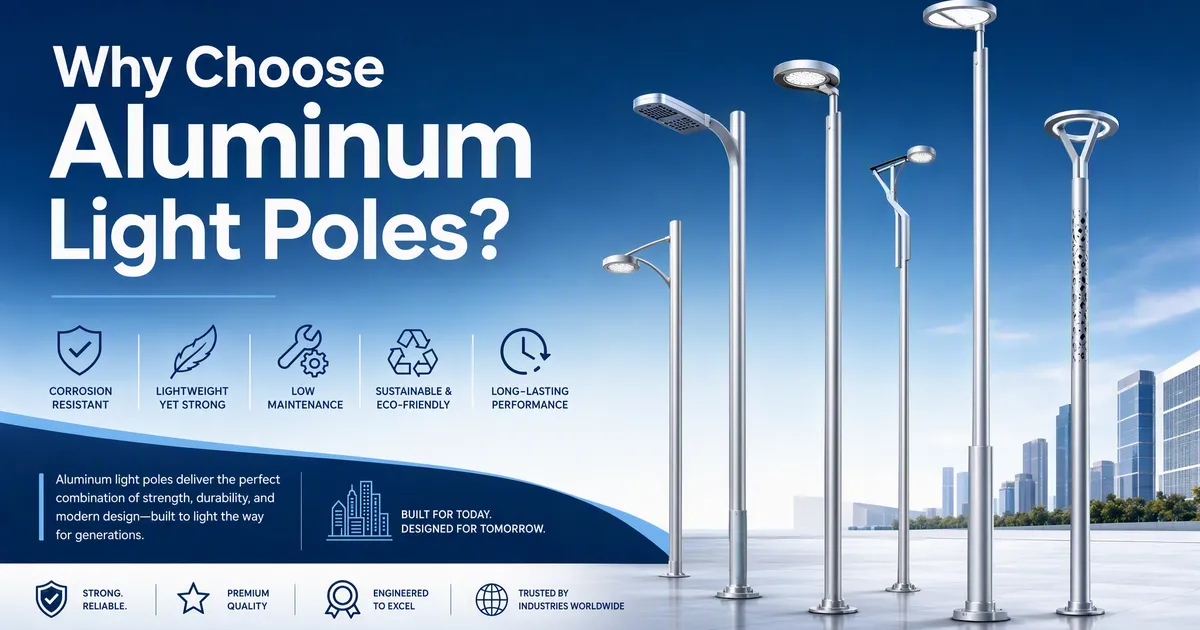
Aluminum light poles can be a practical option for roadway, commercial, landscape and coastal lighting projects, but material selection should be based on the site conditions and design requirements. This guide explains when aluminum is appropriate and which technical details buyers should confirm before specifying a pole.
Corrosion Performance
Aluminum forms a natural oxide layer that helps resist corrosion. Alloy, temper, surface finish, drainage details and local exposure conditions still matter, especially near saltwater, industrial pollutants or persistent moisture. Review our coastal corrosion protection guide for project-specific considerations.
Where Aluminum Light Poles Fit Best
Aluminum poles are commonly considered for streets, parking areas, campuses, parks, pathways and architectural lighting where corrosion resistance, lower handling weight or custom profiles are important. The final choice should also account for pole height, luminaire loading, wind criteria and the applicable local standard.
Lifecycle and Maintenance Considerations
Lifecycle cost depends on the initial specification, finish system, exposure environment, inspection schedule and repair requirements. Aluminum may reduce corrosion-related maintenance in suitable environments, but buyers should compare complete project requirements rather than material price alone.
Recyclability and Material Recovery
Aluminum is widely recyclable and can retain value at the end of a pole’s service period. Actual recovery depends on local recycling systems, coatings, attached components and how the pole is dismantled. Sustainability claims should therefore be supported by project-specific documentation.
Coastal Exposure Considerations
For coastal projects, confirm the alloy, finish, fastener compatibility, drainage, electrical isolation and maintenance plan. Aluminum can perform well in corrosive environments when the complete assembly is designed for the exposure; the material alone does not remove the need for engineering review.
Handling and Installation
Aluminum poles generally weigh less than comparable steel configurations, which can simplify transport and site handling. Installation requirements still depend on pole size, mounting method, lifting plan, foundation design and local safety procedures. See the direct burial vs. anchor base guide.
Profiles and Finish Options
Extruded, tapered, curved and decorative profiles allow aluminum poles to serve both functional and architectural requirements. Powder-coated, anodized or mechanically finished surfaces may be specified according to the desired appearance and exposure environment.
Passive Safety Requires a Tested Design
Passive safety is not an automatic property of every aluminum pole. Where breakaway or energy-absorbing performance is required, specify a pole system designed and tested to the applicable road-safety standard, including its foundation and connection details.
Service Life Depends on Project Conditions
No single service-life figure applies to every light pole. Performance depends on structural loading, alloy and finish selection, installation quality, drainage, electrical isolation, inspection and the surrounding environment. Procurement documents should define these conditions instead of relying on a generic lifespan promise.
How to Specify an Aluminum Light Pole
Provide the required height, mounting method, luminaire quantity and projected area, design wind criteria, finish, access-door details and applicable standard. Read the 6063-T6 aluminum light pole guide, explore our aluminum light pole range, or send your project requirements for review.