
- ISO 9001 Certification
- Original Manufacturer
- Factory Price
- OEM/ODM Services
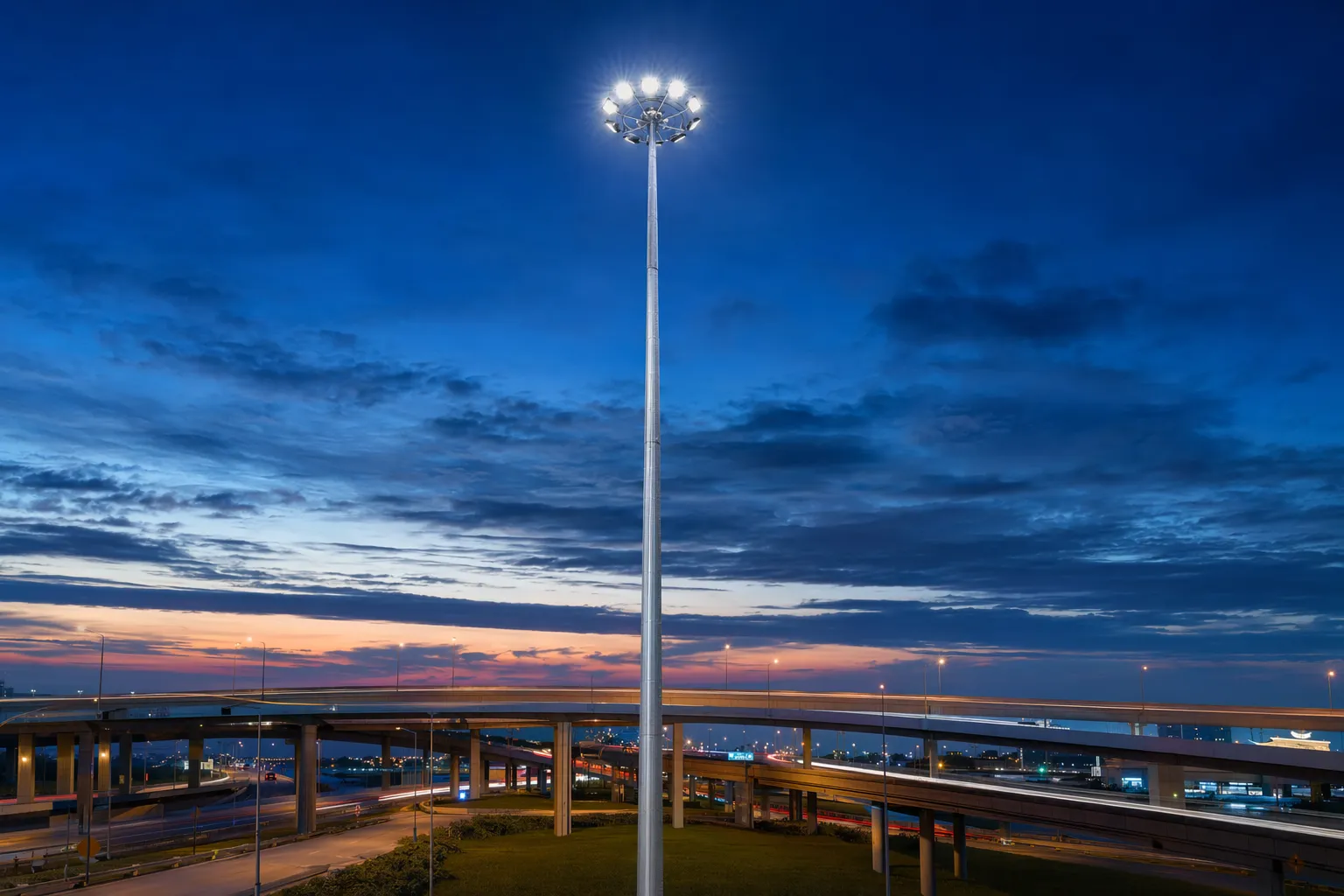
High Mast Light Pole Manufacturer
High mast lighting systems configured for large-area applications with project-specific mast height, raising and lowering equipment, luminaire arrangement, structural design, corrosion protection, and maintenance access.
15–50m Height Options
High mast configurations for ports, airports, highways, yards and sports facilities
Raising & Lowering System
Motorized winch lowers the luminaire carriage for safer ground-level maintenance
Structural & Wind-load Design
Mast shaft, foundation and fixture loads engineered to project requirements
Custom Luminaire Arrangement
Fixture quantity, power, optics, aiming and controls configured by lighting design
Purpose-Built for Mission-Critical Infrastructure
The YLDG-M series delivers uniform, high-lumen illumination across vast open areas — from highway interchanges to container ports — with minimal maintenance downtime.
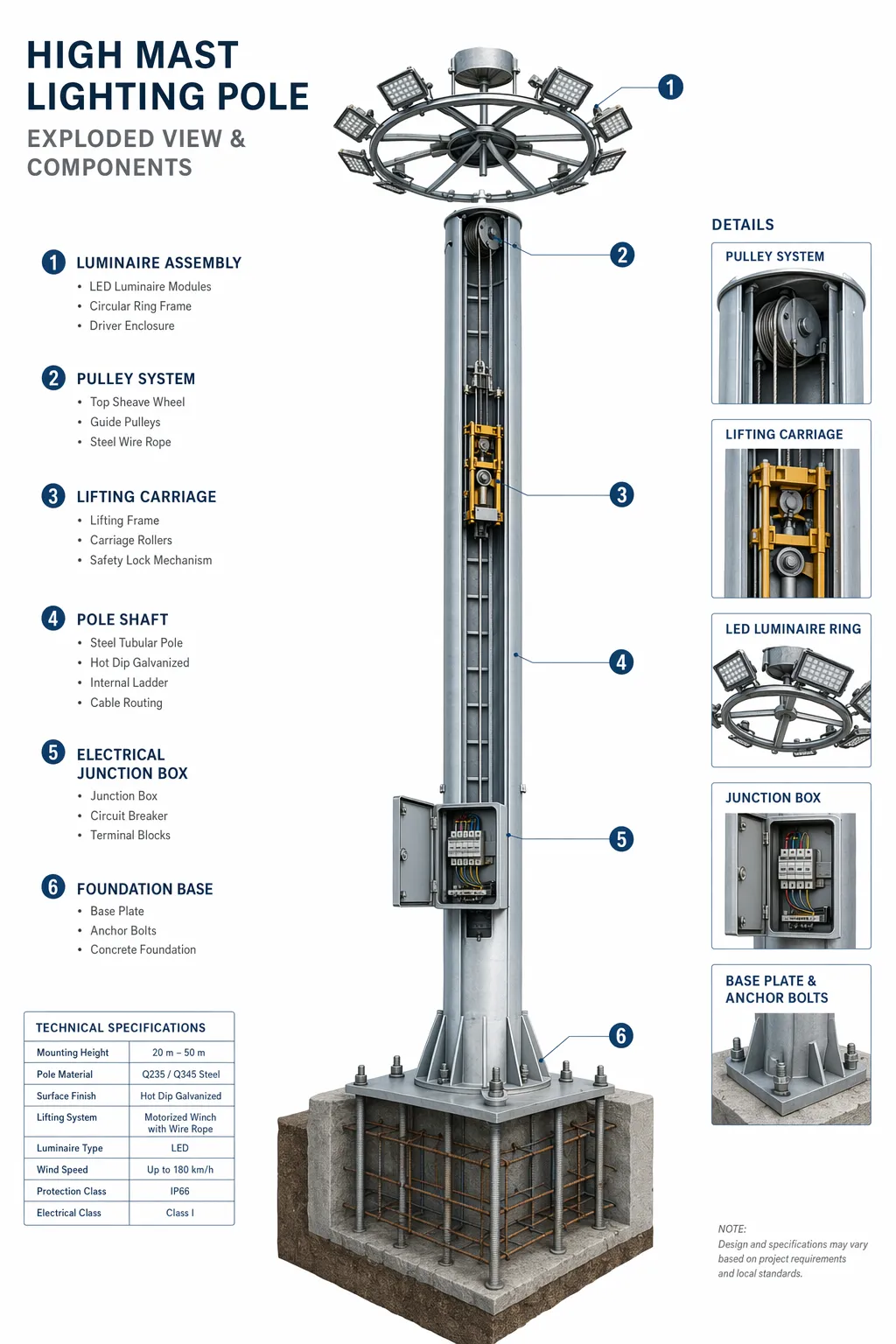
- Pole Height
- Pole Material
- Pole Shape
- Base Diameter
- Top Diameter
- Wall Thickness
- Wind Load
- Luminaire Count
- Luminaire Power
- Total Power
- System Efficacy
- Total Lumen Output
- CCT
- 20m / 25m / 30m / 35m / 40m / 50m
- HDG Q345B Steel / SS 304/316L
- Tapered / octagonal / dodecagonal
- 620mm — 860mm
- 200mm
- 6mm - 35mm
- ≤ 160 km/h
- 4 / 6 / 8 / 12 modules (configurable)
- 200W per module
- 800W — 2400W per pole
- 180 lm/W
- Up to 432,000 lm (12-module)
- 4000K / 5000K
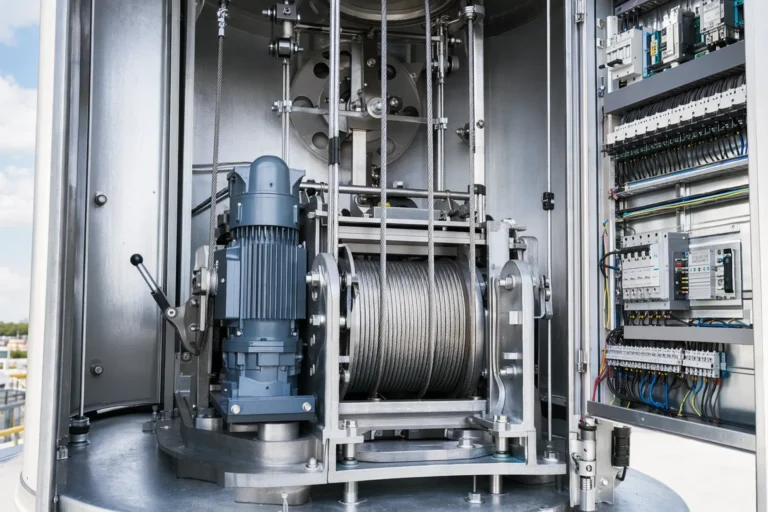
Motorized Lifting & Lowering System
The heart of the YLDG-M is its electrically-powered winch mechanism, housed within the pole base. A 1.5 kW motor drives a planetary gearbox through a stainless steel cable and pulley system, enabling a single technician to safely lower the entire luminaire carriage to ground level for maintenance — eliminating the need for bucket trucks or cranes.
- 1.5 kW three-phase motor with thermal overload protection
- 316 stainless steel wire rope, 8mm diameter, 6×19 construction
- Automatic mechanical brake engages on power failure
- Guide rollers prevent cable tangling during operation
- Lowering speed: 3 meters per minute (controlled descent)
- Manual override hand-crank for emergency operation
- Carriage locking mechanism at operating position
- Maintenance cycle: < 30 minutes for full lowering and raising
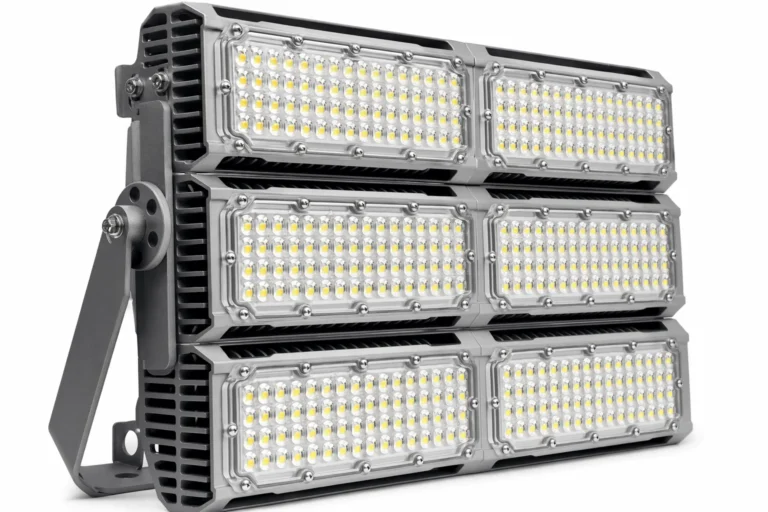
High-Power LED Luminaire Module
Each YLDG-M carries 6 independently aimed LED floodlight modules, delivering up to 216,000 lumens of uniform white light. The modular design allows individual fixture replacement without disrupting the entire system.
- Luminaire quantity, wattage, weight, and total EPA confirmed for the approved lighting design
- System efficacy confirmed from the selected luminaire data sheet and test documentation
- CCT and CRI selected according to the application and project specification
- Rated life and lumen maintenance confirmed for the selected luminaire model
- Optical distribution and aiming angles determined by project-specific photometric calculations
- Housing material and thermal design confirmed from the luminaire manufacturer’s documentation
- Lens, sealing, and UV-resistance requirements specified for the installation environment
- Surge protection coordinated with the electrical system and local exposure conditions
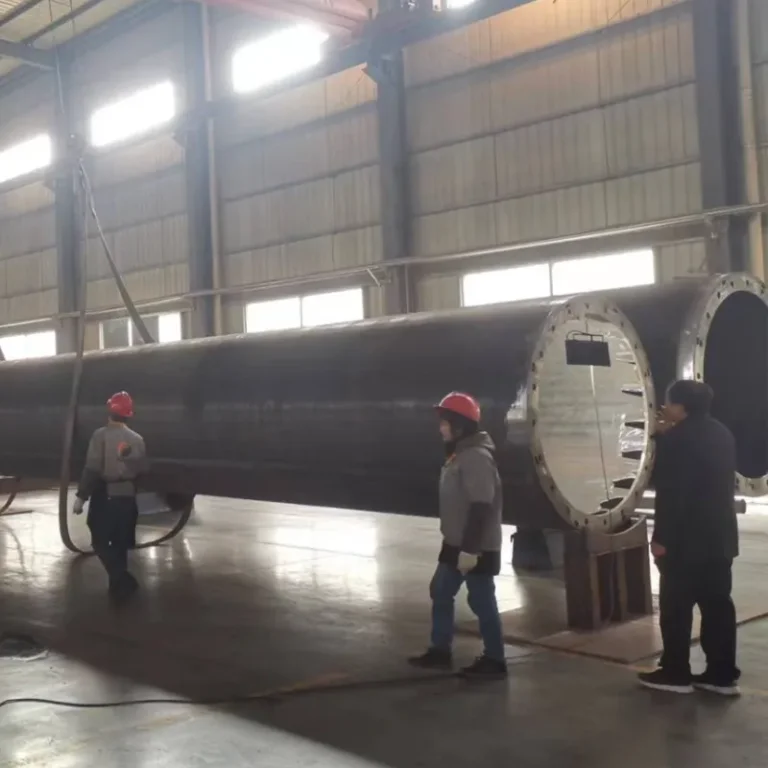
Pole Shaft & Foundation System
The tapered octagonal or Tapered pole shaft is fabricated from high-strength Q345B steel plate, seam-welded and hot-dip galvanized for maximum corrosion protection. The multi-section design with flanged connections allows transport and on-site assembly.
- Material: Q345B high-strength low-alloy structural steel
- Shape: Tapred Round or Tapered octagonal (12-sided optional)
- Wall thickness: 6mm to 35mm
- Wind load rating: up to 160 km/h (Category III)
- Seismic rating: Zone 3 / Site Class D
- Foundation: Reinforced concrete with embedded anchor bolt cage
- Flange connection: 24× M30 hot-dip galvanized bolts
- Coating: Hot-dip galvanized per ASTM A123 (85μm min.)
Deployed Where Scale Meets Safety
The YLDG-M series is the standard solution for large open areas requiring uniform, high-intensity illumination with minimal fixture count.
Airports & Runways
Apron, taxiway, and cargo area illumination meeting ICAO standards for vertical and horizontal illuminance.
Highway Interchanges
Grade-separated intersections and toll plazas with uniform light distribution eliminating dark spots.
Ports & Yards
Container terminals, logistics yards, and rail facilities requiring 24/7 high-security lighting.
Sports & Events
Stadium perimeter, training fields, and outdoor event spaces with glare-controlled flood lighting.
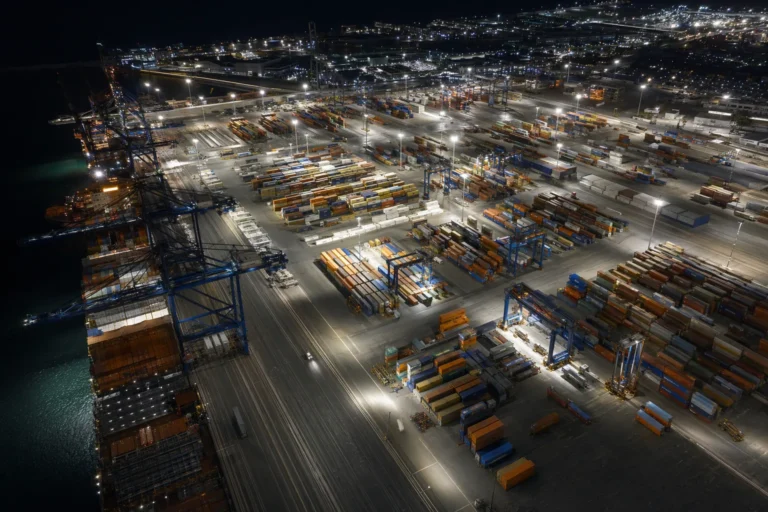
Container Port Illumination
Multiple YLDG-M units deployed across a major container terminal, providing 30+ lux uniform illuminance across operational areas while reducing energy consumption by 65% compared to legacy HPS installations.
High Mast Light Pole FAQs
What is a raising and lowering high mast system?
A motorized winch, wire-rope and pulley assembly lowers the luminaire carriage to ground level for inspection and maintenance. This can reduce dependence on cranes or high-access vehicles when the system is operated under the approved maintenance procedure.
Where are high mast lighting systems used?
Common applications include ports, airports, highway interchanges, logistics yards, large parking areas and sports facilities. For lower mounting heights or localized area lighting, compare our flood light poles and street light poles.
What information is needed for a high mast quotation?
Provide the project location, required mounting height, design wind speed, target illuminance, site dimensions, luminaire preference, power supply, control requirements and applicable standards. Photometric and structural calculations should be completed for the final configuration.
How should high mast systems be maintained?
Recommended inspections include the winch, wire rope, pulleys, mechanical locking system, electrical connections, luminaires, access door, fasteners and corrosion protection. Maintenance intervals should follow the approved design, local regulations and site operating conditions.
Related Technical Guides
- Deep Design & Engineering Support
- CAD & Technical Drawings
- 3D Renderings & Visualization
- Prototyping & Sampling
- Flexible Manufacturing (OEM & ODM)
- Street Lighting & Roadway Poles
- Commercial & Residential Landscape Lighting
- High Mast Poles for areas, ports, and stadiums
- Decorative & Architectural Poles for urban beautification projects
- Solar Light Poles