
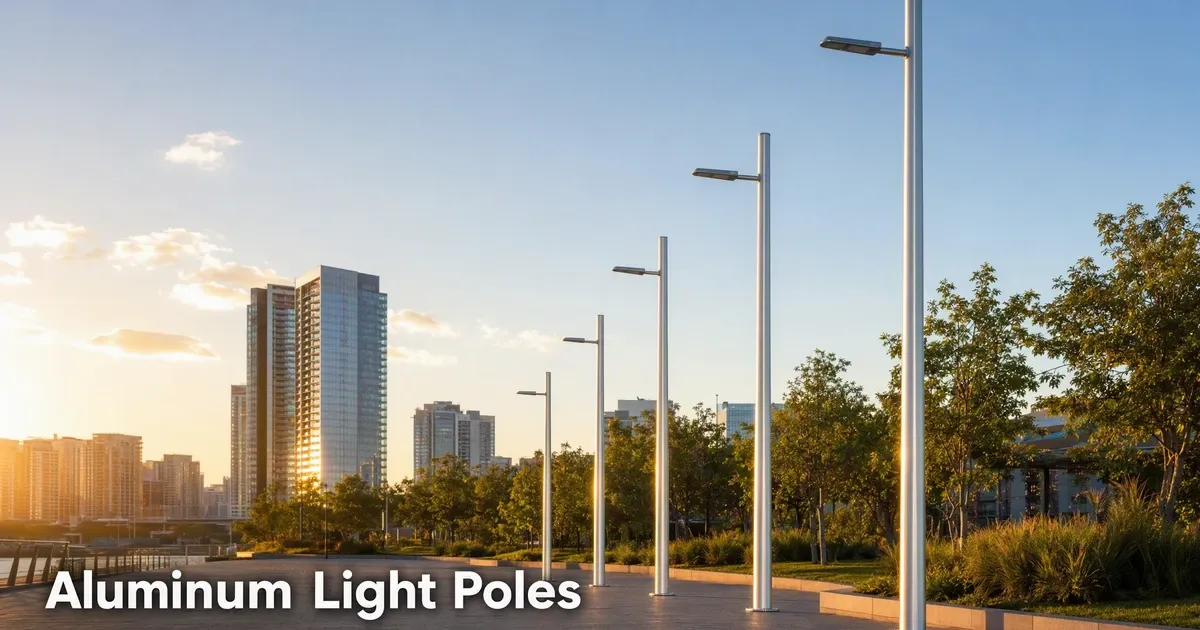
Understanding Aluminum Light Pole Advantages
Aluminum light poles offer several material and manufacturing advantages, but their suitability must be evaluated against structural loading, exposure conditions, mounting details and the applicable project standard. The points below explain the main benefits without treating aluminum as the correct choice for every installation.
Corrosion Resistance with Project-Specific Qualifications
Aluminum forms a natural oxide layer that helps resist corrosion. Long-term performance still depends on alloy and temper, finish selection, drainage, fastener compatibility, electrical isolation and the surrounding environment. Coastal or industrial exposure requires additional review.
Lower Weight for Handling and Installation
Aluminum generally has lower density than steel, which can simplify transportation, lifting and installation. Actual handling requirements depend on the finished pole dimensions, wall thickness, brackets, mounting method and site lifting plan.
Maintenance and Lifecycle Considerations
Corrosion resistance may reduce some coating and rust-related maintenance requirements in suitable environments. Lifecycle cost should still include the initial specification, finish system, inspection schedule, replaceable components and local labor conditions rather than relying on a generic savings percentage.
Profile and Finish Flexibility
Aluminum can be extruded and fabricated into tapered, curved, fluted and decorative profiles. Powder coating, anodizing and mechanical finishing provide different appearance and exposure characteristics for roadway, commercial and landscape projects.
Recyclability and End-of-Life Recovery
Aluminum is widely recyclable and may retain material value after use. Actual recovery depends on local recycling facilities, attached components, coatings and dismantling practices. Project sustainability claims should be supported by relevant documentation.
Structural Performance Must Be Engineered
Strength, fatigue behavior and wind performance depend on the complete pole design—not the material name alone. Pole height, shaft geometry, alloy and temper, weld details, luminaire weight, projected area, mounting arrangement and foundation must be reviewed together.
Compare the Advantages Against Project Requirements
Use the 6063-T6 aluminum guide for material background, the price guide for cost factors and the project selection guide to decide when aluminum is appropriate. Browse our aluminum light pole range or send your specifications for review.