

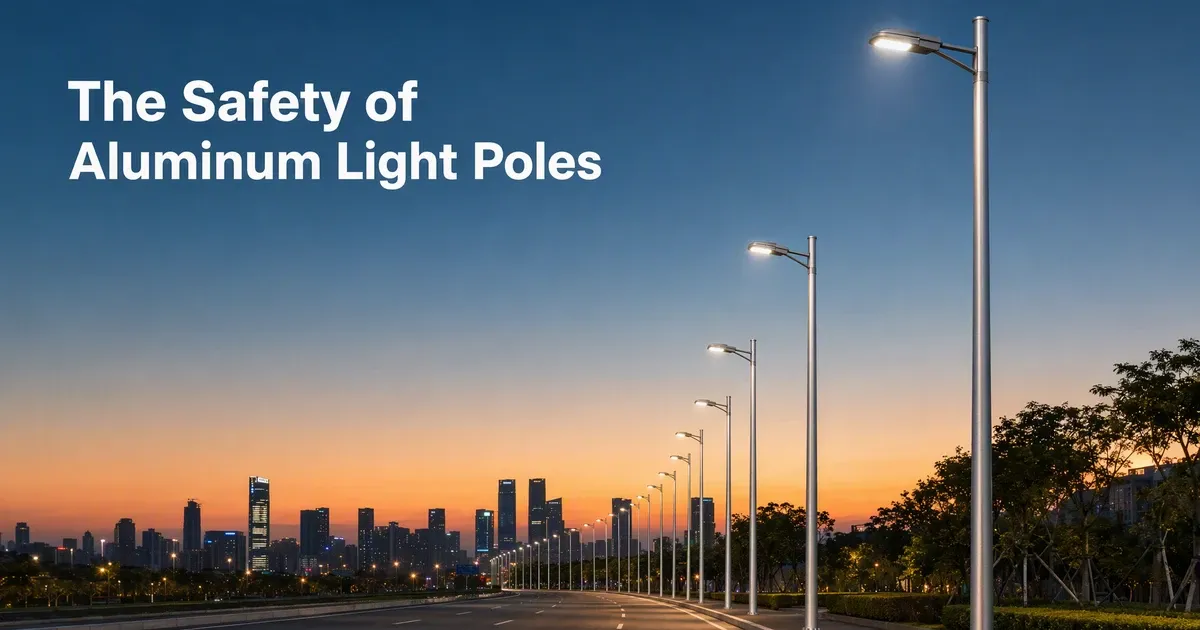
Are aluminum light poles safe? Safety depends on the complete pole system: structural design, attachments, foundation, electrical installation, site exposure and ongoing inspection. Aluminum offers useful weight and corrosion characteristics, but material choice alone does not establish wind, impact or seismic performance. This guide explains what buyers should verify before selecting a pole for a public or commercial project.
Why Aluminum Light Poles Are a Safe Choice for Urban Lighting
Aluminum light poles can be suitable for urban lighting when the selected design is checked against the site’s structural and electrical requirements. Lower material weight may simplify handling, but installation equipment and foundation details still depend on pole size and access conditions.
Aluminum does not rust like carbon steel, yet its alloy, finish, fasteners and exposure still require inspection. Collision behavior and passive safety cannot be inferred from material alone; they require an appropriately designed and, where specified, tested pole system.
The Structural Strength of Modern Aluminum Light Poles
Structural capacity depends on the selected alloy, shaft geometry, wall thickness, connections and the loads for the specific site. Lower weight does not by itself establish impact resistance or high-wind capacity.
Ask for the design drawing and structural checks for the proposed height, arm outreach and luminaire arrangement. Collision performance requires separate evaluation where roadside passive safety is specified.
Corrosion Resistance and Long-Term Safety Performance
Aluminum forms a natural oxide layer and does not develop red rust like carbon steel. However, coastal salts, dissimilar-metal contact, damaged finishes and trapped water still require attention.
Specify the alloy, finish, fasteners and drainage for the exposure, then inspect the base, access door and connections during service. Corrosion resistance can support durability, but it is not a substitute for structural checks or a maintenance plan.
How Aluminum Light Poles Withstand Extreme Weather Conditions
Wind, ice and snow performance depends on the complete pole configuration: shaft geometry, wall thickness, arm outreach, luminaires or panels, connections and foundation. Aluminum as a material does not guarantee that a pole will withstand a particular storm.
Specify the local design hazards and applicable code, then obtain project-specific structural verification. Coastal exposure also calls for suitable finish, drainage, fasteners and maintenance; corrosion resistance does not remove the need for those details.
Safety Standards for Aluminum Street Light Poles
Safety requirements depend on the installation location and the standard adopted by the project authority. In the United States, ASCE/SEI 7 addresses structural design loads. For European lighting columns within its scope, EN 40-3-1 covers characteristic loads, including wind effects.
Ask for the applicable design basis, approved drawings and relevant test or inspection records for the specific model. A generic reference to a standard or a material test is not proof that every finished pole and foundation complies.
The Importance of Wind Resistance in Aluminum Pole Design
Wind resistance is established by checking the complete design against the project’s wind criteria. The engineer needs the pole height and profile, wall thickness, arm outreach, luminaire weight and effective projected area, plus the connection and foundation details.
Aerodynamic shape can affect loading, but it does not by itself establish capacity. Request the applicable design basis and approved structural calculations for the selected configuration.
Anti-Rust Features That Improve Light Pole Security
Although rust is a common threat to outdoor structures, effective anti-rust features can significantly enhance the security and longevity of aluminum light poles.
When you choose a light pole with a protective coating, like powder coating or anodizing, you’re not just preventing rust; you’re also fortifying the pole against corrosion. These coatings create a barrier that keeps moisture and pollutants at bay, ensuring that the aluminum beneath stays intact.
You should also look for light poles designed with drainage features, as these help prevent water accumulation, which can lead to rust development.
Comparing the Safety of Aluminum vs Steel Light Poles
Both aluminum and protected steel poles can be suitable for outdoor lighting when designed for the same site loads. Aluminum generally offers lower weight and does not rust like carbon steel; steel provides different strength and fabrication options and needs an appropriate corrosion-protection system.
Neither material is automatically safer in high winds. Compare the actual pole designs, finish systems, attachments, foundations and inspection plans under the same project criteria.
How Quality Manufacturing Enhances Pole Stability
Manufacturing quality supports reliable performance when it follows an approved design. Material traceability, dimensional checks, weld or connection inspection, finish control and documented quality checks should match the specified pole.
Ask which records are available for the selected model and production batch. Material quality and anodizing alone cannot establish structural capacity or guarantee a particular service life.
Earthquake and Storm Resistance of Aluminum Light Poles
Earthquake and storm resistance are design outcomes, not inherent guarantees of aluminum. Where seismic loading applies, the engineer should check the pole, attachments, anchorage and foundation for the required load combinations.
For wind and other environmental actions, use the standard adopted by the project jurisdiction and the actual equipment loads. Do not assume that flexibility or a streamlined profile alone prevents failure.
Security Benefits of Lightweight Aluminum Pole Structures
Lower weight can help with transport and handling, but stability comes from the engineered pole-and-foundation system. Corrosion performance also depends on the finish, drainage, fasteners and environment.
Do not assume that appearance deters vandalism or that material choice alone prevents structural failure. Access-door security and any anti-tamper features should be specified and verified separately.
Preventing Accidents with Durable Aluminum Lighting Poles
Accident risk is reduced through appropriate lighting design, structurally verified poles, correct installation and inspection. A pole’s material alone cannot guarantee impact resistance or prevent falling.
For roadside applications, confirm whether a passive-safety classification is required and whether the proposed pole system has relevant test evidence. Inspect damage, corrosion-prone details and loose connections promptly.
How Aluminum Light Poles Reduce Maintenance Risks
Aluminum does not develop red rust like carbon steel, but its finish, joints, fasteners, base and electrical openings still need inspection. Salt deposits, standing water or damage can create maintenance needs.
Set cleaning and inspection intervals according to the site’s exposure and the supplier’s guidance. Lower weight may assist handling, but safe repairs and replacement still require suitable access, lifting and electrical isolation procedures.
Protective Coatings and Their Role in Pole Safety
Anodizing or a suitable coating can protect the appearance and surface of an aluminum pole, but the correct system depends on the alloy and environment. Fasteners, cut edges, connections and areas where water collects also need attention.
Request the specified finish and care instructions, and repair damage using a compatible method. A decorative coating should not be presented as proof of structural safety or visibility to road users.
Smart Engineering Behind Secure Aluminum Light Pole Systems
A sound pole design considers the site’s wind and other required loads, attachments, connections and foundation. The applicable code and approved drawings should document those checks for the selected model.
Sensors, remote monitoring and anti-tamper hardware are optional project features, not standard properties of every aluminum pole. Confirm whether they are included in the quoted configuration and how they will be maintained.
Why Cities Prefer Aluminum Light Poles for Public Safety
Municipal buyers may consider aluminum for its weight, available profiles and finish options. Selection still depends on the lighting layout, design loads, site exposure, procurement requirements and lifecycle budget.
A well-designed lighting installation can improve visibility, but crime reduction or guaranteed storm-time operation cannot be attributed to pole material alone. Review the complete lighting and maintenance plan.
Load-Bearing Capacity of Aluminum Decorative Light Poles
Decorative aluminum poles can be designed to carry lighting fixtures and selected accessories, but each attachment changes the loads on the shaft, arms, connections and foundation. Banners, cameras and solar panels can add substantial wind-exposed area.
Before adding equipment, confirm its weight, projected area and mounting position against the approved pole design. Do not assume an existing decorative pole is rated for every accessory.
Safe Installation Practices for Aluminum Lamp Poles
Install the selected pole using the approved drawings and foundation design. Embedment depth for a direct-burial pole and anchor-bolt details for a base-plated pole depend on soil conditions, pole geometry, loads, corrosion exposure and local requirements; there is no universal rule that the hole should be one-third of the pole height.
Confirm excavation, foundation dimensions, bolt installation and tightening, electrical clearances and final alignment with the responsible engineer and installer. Inspect the completed installation according to the project maintenance plan.
The Role of Material Quality in Light Pole Security
Confirm the specified aluminum alloy and temper, wall thickness and manufacturing records for the chosen pole. The complete design must also account for attachments, connections, foundation and the site’s environmental loads.
A material test report can verify a tested sample or batch within its stated scope; it does not replace structural verification of every pole configuration. Request the records relevant to the exact product being purchased.
Future Trends in Safer Aluminum Lighting Infrastructure
Optional sensors, anti-tamper hardware and monitoring systems may be useful for some projects, but they are not inherent safety features of an aluminum pole. Their weight, wind-exposed area, power supply and maintenance needs must be included in the design.
New materials or finishes should be assessed using product-specific evidence rather than assumed to improve safety or reduce costs. Buyers should verify what is included in the supplied configuration.
Conclusion
Aluminum light poles can be a suitable choice when the selected model is engineered for the site’s loads and installed on an approved foundation. Material and finish selection, electrical safety, inspection and maintenance all contribute to long-term performance.
Before ordering, request the project-specific design basis, drawings and relevant quality records. Review the available aluminum light pole configurations and our wind load calculation guide to prepare the information for an engineering review. Do not treat material choice, appearance or optional smart features as a substitute for those checks.