
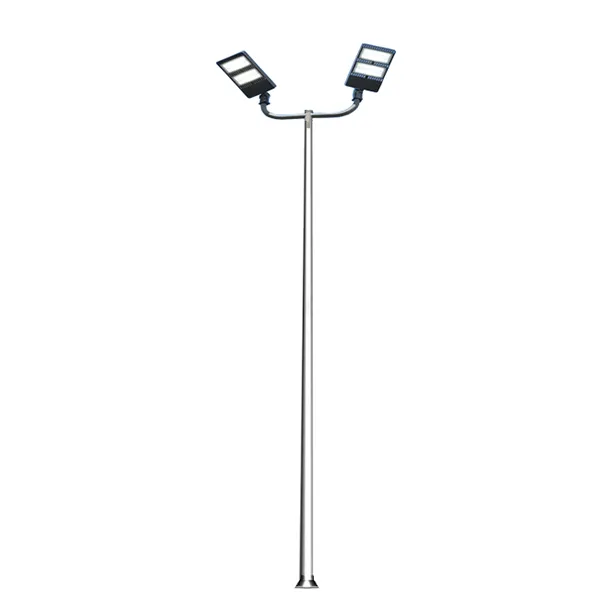
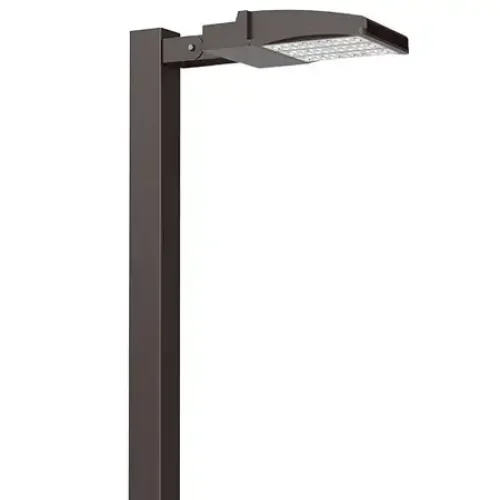
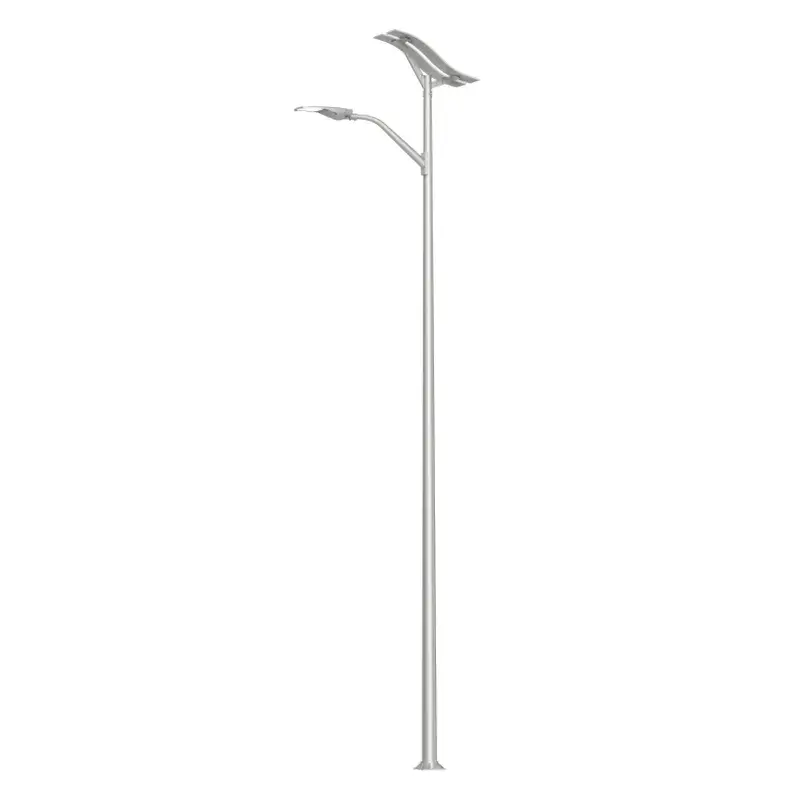
Tennis court light poles stand as silent, essential guardians of the game, transforming the defined rectangle of the court into a stage for athletic pursuit long after the sun has set. Their purpose extends far beyond mere illumination; they are a critical engineering component designed to meet the specific and demanding visual requirements of the sport. The quality of play under lights is directly dictated by the performance of these systems, making their design and implementation a sophisticated blend of physics, material science, and sports science.
The primary objective of tennis court lighting is to achieve a uniform, shadow-free, and glare-controlled distribution of light across the entire playing surface. This is because players must be able to track a small, fast-moving ball against a variety of backgrounds, including the dark night sky. Inadequate lighting, characterized by bright spots next to deep shadows or intense glare causing eye strain, renders high-level play impossible and increases the risk of injury. The engineering goal is to bathe the court in an even blanket of light that mimics the consistency of a overcast day, allowing for seamless visual tracking from the baseline to the net and into the corners.
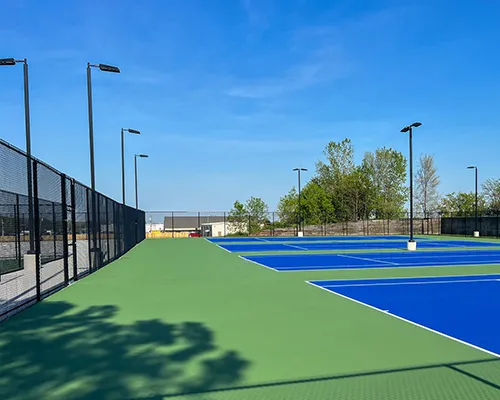
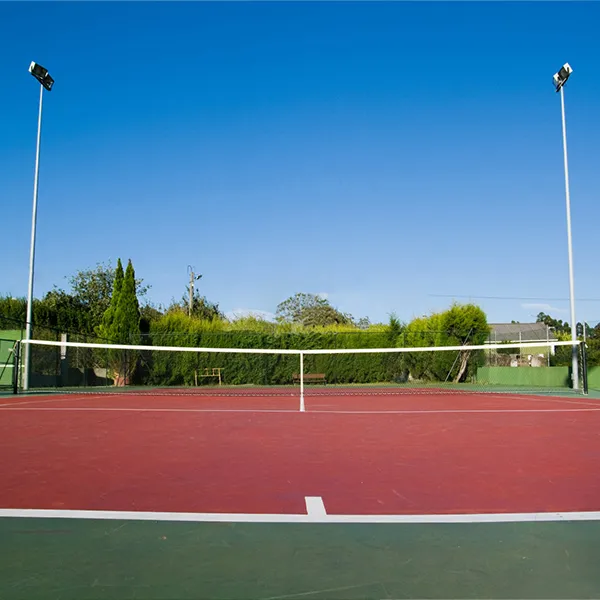
To accomplish this, the design of the poles and their fixtures is paramount. Poles are typically constructed from galvanized steel or aluminum, materials chosen for their exceptional strength-to-weight ratio and resistance to the environmental corrosion caused by constant exposure to sun, rain, and wind. The height of these poles is a carefully calculated variable. They are most commonly set between 25 and 30 feet tall. This elevation is a strategic compromise; it is high enough to position the light sources at an angle that minimizes direct glare into players’ eyes while ensuring a wide, deep throw of light that covers the court’s full length and width. Mounting fixtures too low would create a blinding effect and produce long, distracting shadows from the players themselves.
The lighting fixtures, or luminaires, mounted on these poles are highly specialized tools. Modern tennis lighting almost exclusively utilizes Light Emitting Diode (LED) technology. LEDs have revolutionized court lighting due to their superior energy efficiency, long lifespan, and exceptional optical control. Unlike older metal halide or halogen bulbs that cast light in all directions, LED fixtures are designed with precise lenses and reflectors. These components focus the light output into specific beam patterns, often asymmetric, that can be carefully aimed and projected onto the court. This precise optical control is what allows for high uniformity, ensuring light lands on the playing surface and not as wasteful spill light into neighboring properties or the night sky, a growing concern regarding light pollution.
The arrangement of the poles around the court is a standard yet crucial aspect of the design. For a single regulation-sized court, a four-pole system is the norm, with one pole positioned at each corner, set back sufficiently to prevent player collision. This configuration provides the most effective cross-lighting, effectively canceling out shadows that would be cast if light came from only one direction. For two adjacent courts, a six-pole system is often employed, with poles placed at the outer corners and shared poles along the common side, maximizing efficiency and maintaining consistent light levels across both playing areas.
Beyond the technical specifications, the installation of these systems demands professional expertise. The poles must be anchored into deep, concrete foundations capable of supporting the immense cantilevered weight of the mast arms and fixtures, especially against wind loads. Electrical systems must be weatherproof and comply with all local safety codes. Furthermore, many jurisdictions have strict ordinances governing light trespass and curfews, meaning modern systems often require shielding and the ability to be turned off or significantly dimmed after a certain hour.
In conclusion, tennis court light poles represent a significant investment in infrastructure that extends the utility and revenue potential of a facility. They are not simple utilitarian structures but are integral to the quality and safety of the game played under them. From the strength of the galvanized steel to the precise optics of an LED fixture, every element works in concert to create a controlled luminous environment where players can compete at their best, ensuring the game of tennis does not surrender to the setting sun.
Tennis court light pole Tennis court light pole Tennis court light pole Tennis court light pole Tennis court light pole Tennis court light pole
Tennis Court Light Pole
Precision Lighting for Championship Courts
The Light Pole System delivers tournament-grade illumination with uniform coverage, zero glare, and 100,000-hour service life. Available in aluminum alloy, stainless steel, or galvanized steel — engineered for operators who demand reliability in any environment.
Max Output
Hours L70
Color Temp
Protection
Pole Height
Lux Average
UGR Rating
Wind Rated
Pole Warranty
Specifications
- Pole Height Range
- Pole Material Options
- Surface Treatment
- Fixture Wattage
- Luminous Efficacy
- CCT
- CRI
- Beam Distribution
- Average Lux (Tennis)
- Uniformity (U1)
- UGR
- IP Rating
- Wind Load Rating
- LED Life (L70)
- Driver
- Surge Protection
- Operating Temp
- Certifications
- Fixture Housing
- Warranty
- 9m / 10m / 12m / 15m
- Aluminum Alloy 6061-T6 / 6063-T5 · Stainless Steel SUS304 / SUS316 · Galvanized Steel ASTM A572 Gr.50 selectable
- anodized / powder-coated / hot-dip galvanized ASTM A123 (min. 85μm)
- 600W / 900W / 1,200W / 1,500W configurable
- 170 lm/W (typ.)
- 4000K / 5000K / 5700K
- ≥80 (Ra) / ≥70 (R9)
- Asymmetric Type III / Type IV / Flood
- 300 lux (recreational) – 750 lux (tournament)
- ≥0.7
- <0.5 (at player eye level)
- IP66 (fixture) / IP65 (driver compartment)
- Up to 150 mph (Category 2 hurricane)
- 100,000 hours
- Mean Well / Inventronics, 0-10V dimmable
- 10kV standard / 20kV optional
- -40°C to +50°C
- CE, RoHS, DLC Premium, LM-79 / LM-80
- ADC12 die-cast aluminum alloy, powder-coated; SUS304 stainless steel fasteners
- 10-year fixture · 25-year pole (aluminum / stainless) · 25-year pole (galvanized steel)
Built for Demanding Sports Environments
Every component is purpose-built for outdoor sports lighting — available in aluminum alloy, stainless steel, or hot-dip galvanized steel pole structures paired with precision-optic LED luminaires.
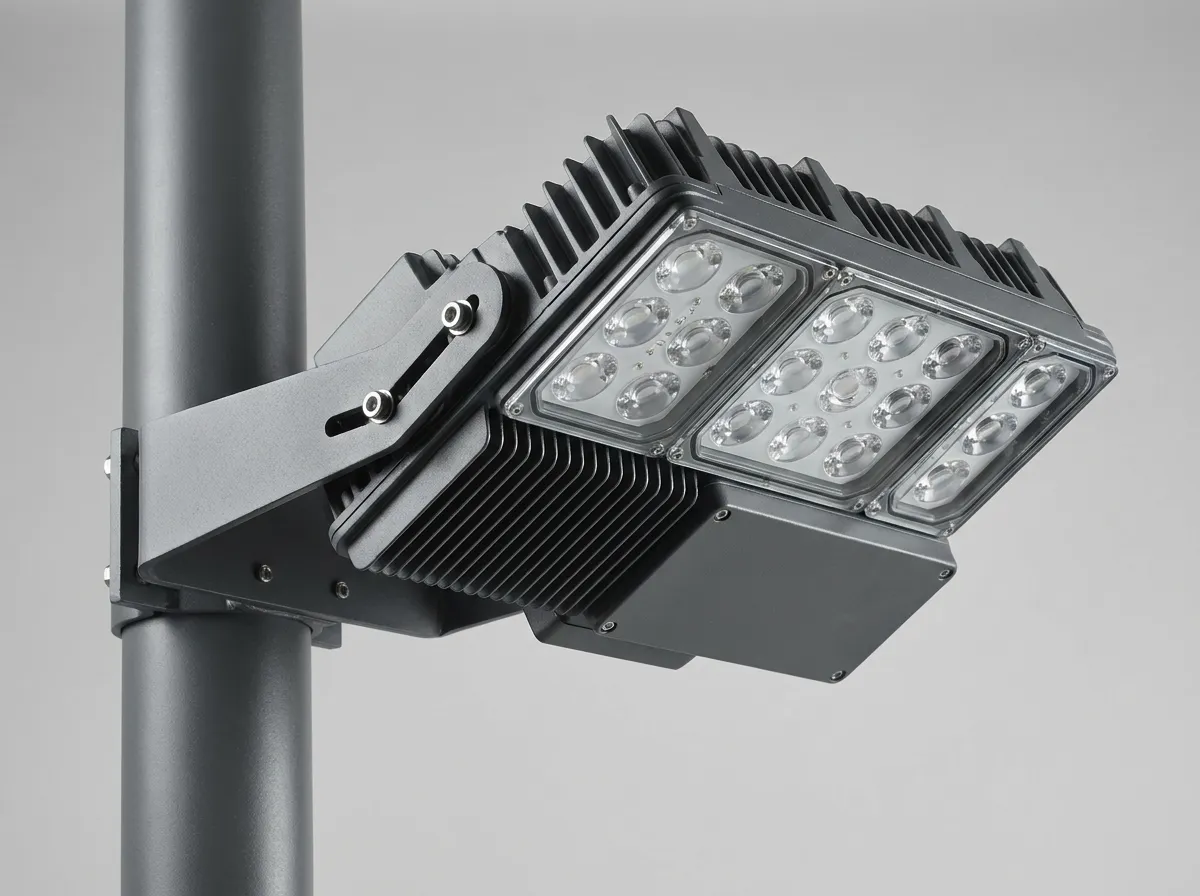
High-Efficiency LED Array with Asymmetric Optics
Our proprietary lens system projects light precisely where players need it — across the court surface — while eliminating spill and glare. The die-cast aluminum alloy housing (ADC12) serves as an integrated heat sink, delivering 170 lm/W efficacy with CRI >80 for true ball tracking.
- ADC12 aluminum alloy housing with stainless steel hardware
- Asymmetric Type III / Type IV beam distribution
- Tool-less aiming with 360° rotation bracket
- Surge protection up to 10kV / 20kV
- 0–10V dimming & smart control ready
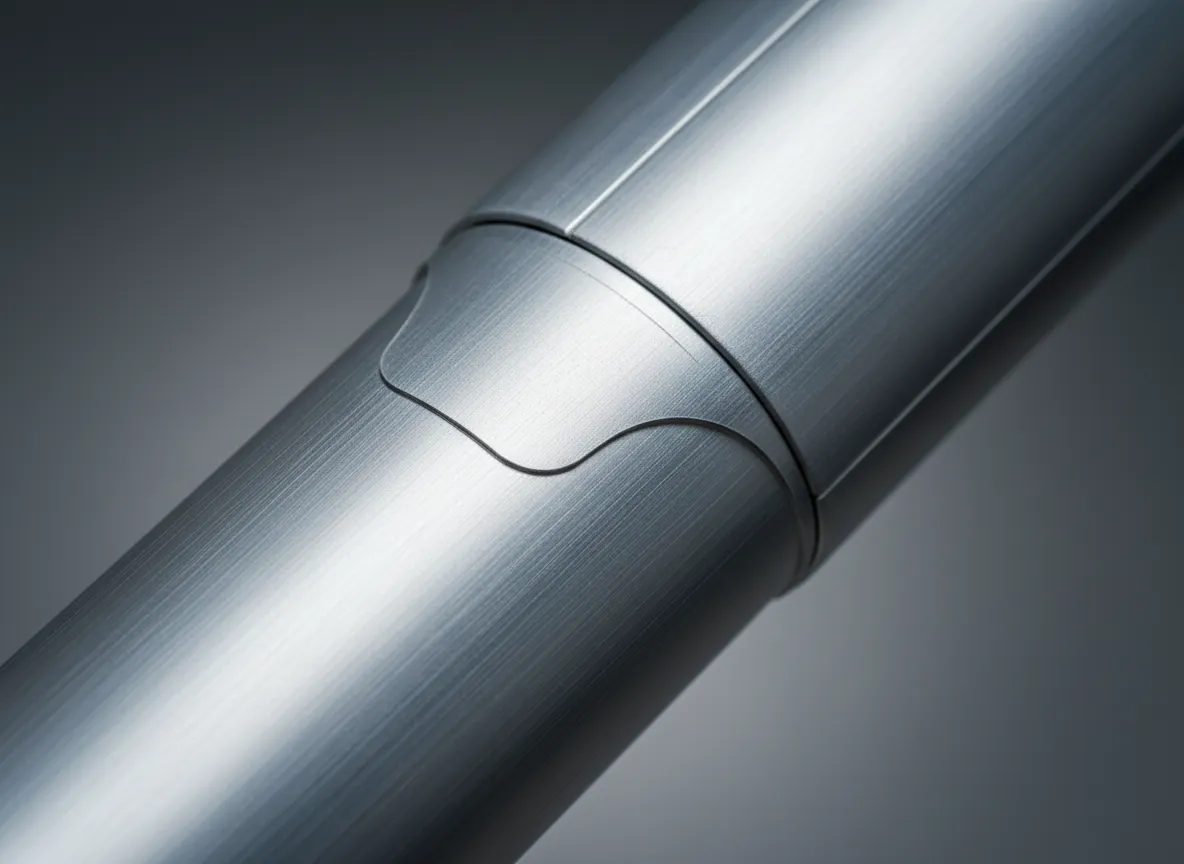
Aluminum Alloy & Stainless Steel — Built to Last Decades
The pole system is available in three premium material grades to match any environment — from coastal installations requiring marine-grade corrosion resistance to inland facilities prioritizing weight savings. All options deliver 25+ year structural integrity.
-
Aluminum Alloy
-
Stainless Steel
-
Galvanized Steel
-
All materials
- Lightweight (1/3 the weight of steel), naturally corrosion-resistant, ideal for coastal & humid climates
- Superior strength-to-weight ratio, exceptional resistance to chemical & salt exposure
- Maximum load capacity, hot-dip galvanized per ASTM A123 for standard installations
- powder-coat finishable, integrated cable channel, anchor bolt template included
Trusted Across Sport & Recreation
From municipal parks to private academies, our light pole system adapts to any facility scale and lighting standard.
Uniform 500+ lux across 6+ courts with minimal pole count
Shared infrastructure for tennis, basketball, pickleball & more
Your Reliable Manufacturing Partner
Our Service
- Deep Design & Engineering Support
- CAD & Technical Drawings
- 3D Renderings & Visualization
- Prototyping & Sampling
- Flexible Manufacturing (OEM & ODM)
Applications of Our Custom Light Poles
- Street Lighting & Roadway Poles
- Commercial & Residential Landscape Lighting
- High Mast Poles for areas, ports, and stadiums
- Decorative & Architectural Poles for urban beautification projects
- Solar Light Poles