
Solar Light Pole with Aluminum or Stainless Steel Shaft, Integrated LED Lighting System, Custom Height, Battery Capacity and Solar Panel Configuration
- YLDG-SL Series
- Aluminum alloy or stainless steel pole options
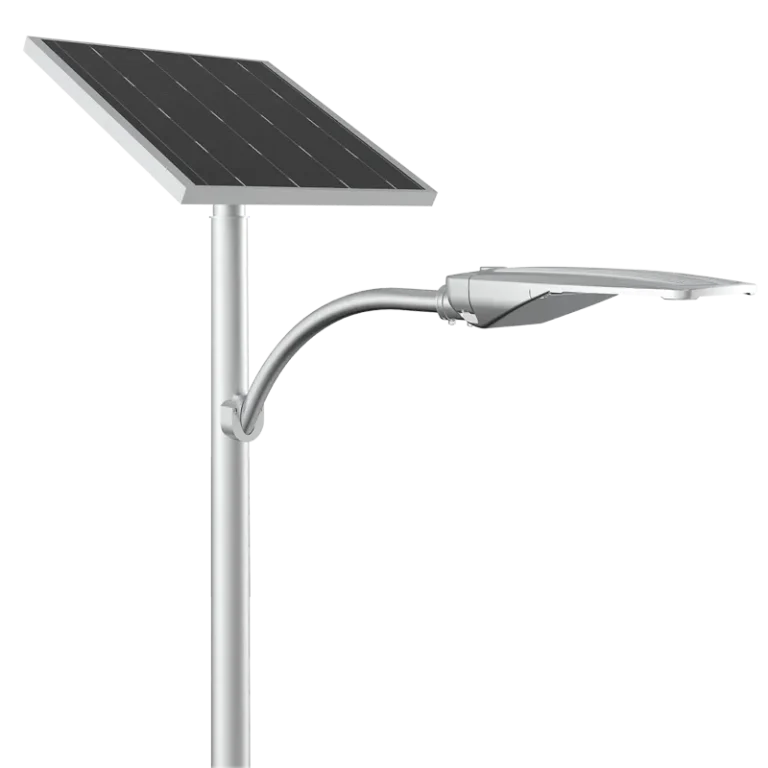
- Solar panel, battery, controller and LED luminaire supplied as one system
- Standalone, hybrid and smart-control configurations available
| MOQ | 10 sets; mixed heights and configurations accepted |
|---|---|
| Pole material | Aluminum alloy 6063-T6 or stainless steel 304 / 316 |
| Height range | 4 m / 5 m / 6 m / 8 m / 10 m / 12 m — custom available |
| Solar system | Panel, battery, controller and LED luminaire configured as a complete set |
| Battery | LiFePO₄ lithium battery or project-specified alternative |
| Lighting mode | Dusk-to-dawn, timed dimming, motion sensing or hybrid backup |
| Finish | Anodized / powder coated aluminum or brushed / coated stainless steel |
| Lead time | 20–35 days after deposit and system drawing approval |
Manufacturing aluminium poles for export markets
Own factory with spinning, welding & coating lines
Annual capacity across 3 production lines
Exported to EU, North America, Middle East, SEA
Technical Specifications
Standard catalogue capabilities for the YL-SOLAR Series. Final pole dimensions and solar-system ratings are confirmed against the approved lighting calculation, wind criteria and site conditions.
| Pole material | Aluminum alloy 6063-T6 or stainless steel 304 / 316 |
|---|---|
| Forming process | CNC spinning, forming or welded construction |
| Cross-section | Round tapered or straight; custom section |
| Height range | 4–12 m; custom available |
| Wall thickness | Aluminum 2.5–6.3 mm; stainless steel 3.0–6.0 mm |
| Surface finish | Anodized, powder coated, brushed or polished |
| Installation | Anchor base or direct burial |
| Cable route | Internal cable path with protected entries |
| Earthing | Internal earth stud and copper lug |
| LED power | Typically 20–150 W, project-specific |
|---|---|
| Solar panel | Mono-crystalline panel sized for local energy demand |
| Battery | LiFePO₄ lithium battery or specified alternative |
| Controller | PWM / MPPT controller with programmable lighting modes |
| Lighting schedule | Dusk-to-dawn, timed dimming or motion-controlled |
| Autonomy | Typically 2–5 nights, subject to local solar conditions |
| Remote monitoring | Optional GSM / 4G / LoRa monitoring |
| Wind design | Calculated from pole, panel and luminaire projected area |
| Warranty | Defined according to selected components and project contract |
Standard Sizes of Aluminum Solar Light Pole
The following values are preliminary references. Solar panel area, battery capacity, pole height and foundation dimensions must be confirmed by the project lighting and structural calculations.
| Model | Material | Height | Top Ø | Base Ø | LED power | Panel power | Battery | Autonomy |
|---|---|---|---|---|---|---|---|---|
| YLDG-SL1 | Aluminum / SS | 4 m | 60 mm | 120 mm | 20–30 W | 80 W | 512 Wh | 2–3 nights |
| YLDG-SL2 | Aluminum / SS | 5 m | 60 mm | 135 mm | 30–40 W | 120 W | 768 Wh | 2–3 nights |
| YLDG-SL3 | Aluminum / SS | 6 m | 76 mm | 150 mm | 40–60 W | 180 W | 1,024 Wh | 3 nights |
| YLDG-SL4 | Aluminum / SS | 8 m | 76 mm | 180 mm | 60–80 W | 240 W | 1,536 Wh | 3–4 nights |
| YLDG-SL5 | Aluminum / SS | 9 m | 76 mm | 195 mm | 80–100 W | 300 W | 2,048 Wh | 3–4 nights |
| YLDG-SL6 | Aluminum / SS | 10 m | 90 mm | 220 mm | 100–120 W | 360 W | 2,560 Wh | 4 nights |
| YLDG-SL7 | Aluminum / SS | 12 m | 90 mm | 250 mm | 120–150 W | 480 W | 3,072 Wh | 4–5 nights |
Reference values only. Final panel power, battery capacity, autonomy and foundation dimensions depend on location, lighting schedule, wind load and approved energy calculation.
Two pole materials, multiple outdoor finishes
Select aluminum for a lightweight, corrosion-resistant structure or stainless steel for a premium appearance and demanding exposure conditions. Both materials can be matched to project colour and architectural requirements. For the aluminum shaft option: powder coating is 80 µm standard (available range: 80–120 µm), and anodizing is 20 µm standard (available range: 15–25 µm). Stainless-steel finishes are specified separately.
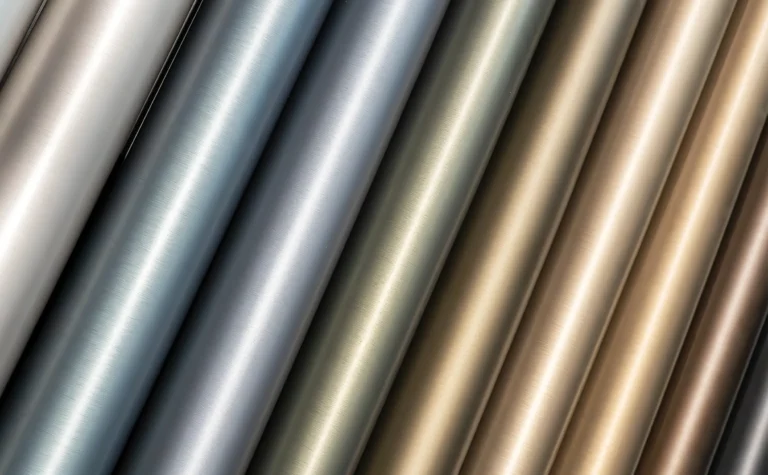
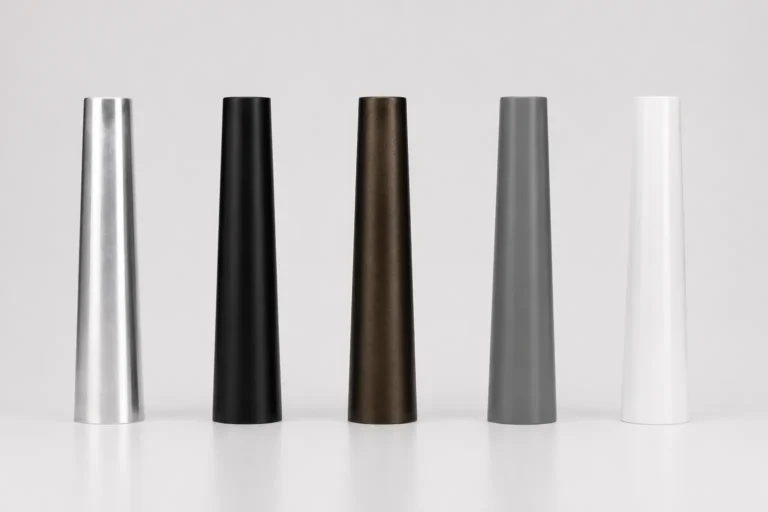

For the aluminum shaft option: 20 µm standard anodizing, available range 15–25 µm.

Most requested for urban and architectural projects

Fine texture, hides dust and handling marks

Standard municipal specification in EU tenders

Parks, resorts, pedestrian zones
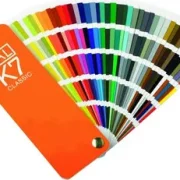
Available in the full RAL color range
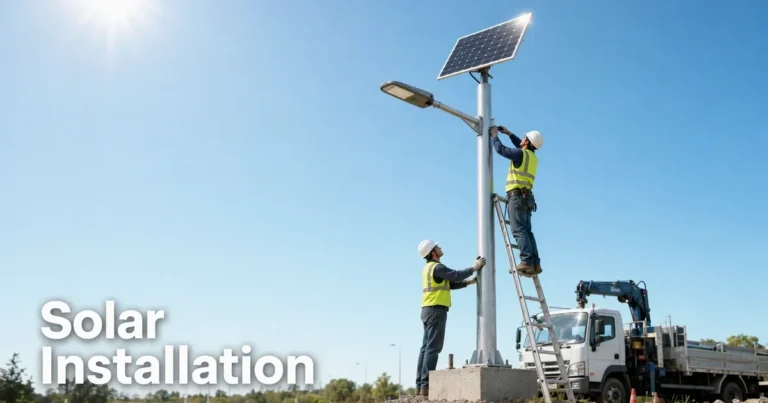
Every component is arranged for energy capture, protection and service access
A solar light pole must support both structural and electrical equipment. Panel position, cable routing, battery protection and access points are coordinated during design.
Material matched to the environment
Aluminum is selected when low weight and corrosion resistance are priorities; stainless steel is available for premium architectural or severe-exposure projects.
Stable panel mounting
The panel bracket is designed for the specified panel size, tilt angle and wind load, with adjustable orientation where required.
Protected cable route
Solar and luminaire cables run inside the pole wherever possible, with deburred entries and protected connections.
Accessible battery compartment
The battery and controller can be arranged in a lockable pole compartment, external cabinet or underground cabinet.
Ground-line and foundation detail
Anchor-base and direct-burial options are available, with isolation and drainage details selected for the site.
Replaceable system components
Panels, controllers, batteries and LED modules can be specified as serviceable components for long-term maintenance.
Configure lighting output, autonomy and control around the site
The correct solar system is determined by sunlight, operating hours, rainy-season performance, panel orientation, battery location and maintenance access.
| Configuration | Suitable applications | Options |
|---|---|---|
| Basic standalone system | Paths, parks and low-traffic areas | Fixed schedule, LiFePO₄ battery |
| High-autonomy system | Regions with long rainy seasons | Larger panel and battery capacity |
| Motion-dimming system | Residential streets and pathways | Full output plus standby dimming |
| Remote-monitoring system | Municipal and distributed assets | GSM / 4G / LoRa communication |
| Hybrid solar system | Sites requiring backup power | Solar priority with grid assistance |
| Custom control system | Smart-city and tender projects | Protocol and controller matched to specification |
Where aluminum and stainless steel solar poles are installed
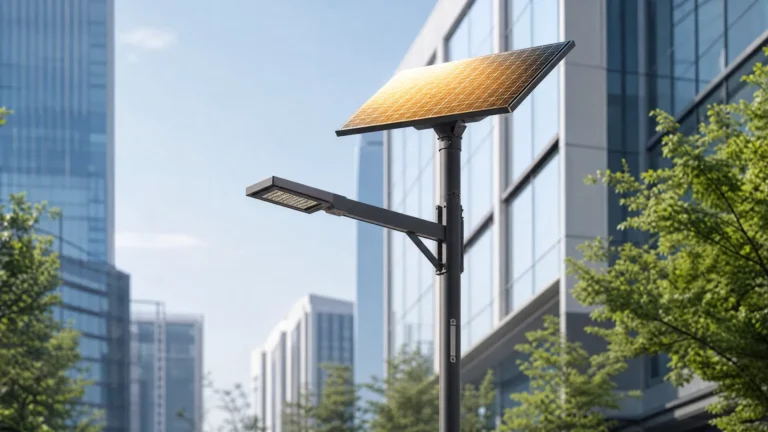
Reliable lighting where grid power is unavailable, costly or difficult to install
Aluminum poles are suitable for lightweight, corrosion-resistant installations. Stainless steel poles are preferred where appearance, impact resistance or demanding exposure conditions require a more robust architectural finish.
Rural roads
5–8 m · standalone solar
Residential streets
6–10 m · motion dimming
Parks and pathways
4–6 m · aluminum or stainless steel
Car parks
6–10 m · higher battery autonomy
Coastal promenades
Stainless steel 316 or protected aluminum
Campuses and resorts
4–8 m · architectural finish
One pole platform, two materials and a complete off-grid lighting system
Solar projects are affected by material selection, sunlight, battery autonomy, wind load and maintenance access. We configure the pole and electrical system together so the complete installation is matched to the site.
Two-way lighting from one pole
Two luminaires serve opposite carriageways or adjacent zones from one foundation, simplifying the lighting layout and installation plan.
Symmetrical or unequal arms
Specify identical arms for balanced lighting or different outreach and tilt on each side for unequal road widths and site boundaries.
Standalone operation
Operate without long underground power runs where grid connection is unavailable or costly.
Independent arm replacement
Each arm can be removed separately. A damaged arm or upgraded luminaire can be replaced without disturbing the shaft or foundation.
Fewer foundations and cable points
One pole can serve two lighting directions, helping reduce foundations, trench connections and installation work on suitable layouts.
Compact export packing
Both arms ship detached and nested flat, avoiding projecting sections and improving protection during container transport.
One manufacturing partner for the pole and solar lighting system
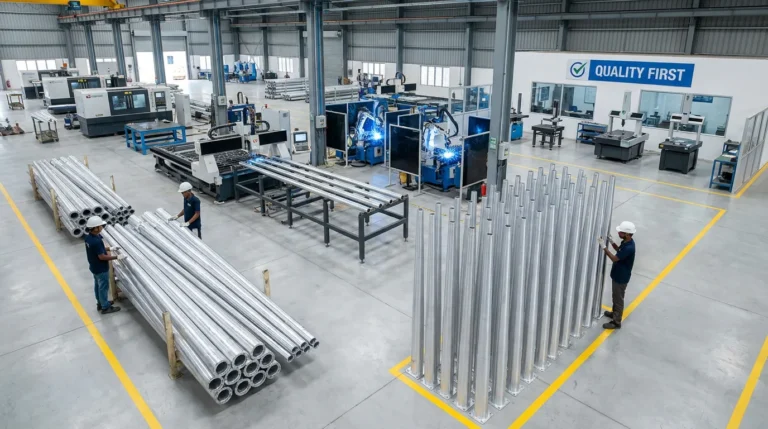
Yaolong manufactures aluminum and stainless steel lighting poles and coordinates solar lighting components for project supply. Our capabilities cover shaft forming, machining, welding, surface treatment and system assembly.
We support contractors, distributors, municipalities and infrastructure developers with custom pole heights, materials, finishes, panel brackets, battery capacities and control functions.
Our engineering team reviews location, solar radiation, lighting hours, autonomy target, wind conditions, luminaire load and installation method before issuing the final production drawing.
Quality system
Environmental
EN 40 conformity
Material report
From pole material to a tested solar lighting set
Pole fabrication, surface finishing and solar-system assembly are coordinated before shipment. The complete set is checked against the approved configuration.
Aluminum alloy or stainless steel material is checked against the project specification.
The pole is spun, formed or welded to the approved height, taper and diameter.
Hand holes, cable entries and battery access points are cut and deburred.
Solar panel and luminaire brackets are made to the approved orientation and load requirements.
Surface treatment
Anodizing, powder coating, brushing or polishing is completed according to the selected material and finish.
Electrical assembly
Panel, battery, controller, LED luminaire and cables are connected and labelled.
System testing and packing
Charging, lighting modes, controller settings and component condition are checked before packing.
Solar components packed separately and labelled for fast assembly
Panels, batteries, controllers and luminaires are protected as individual components, while each electrical kit is labelled to match the corresponding pole.
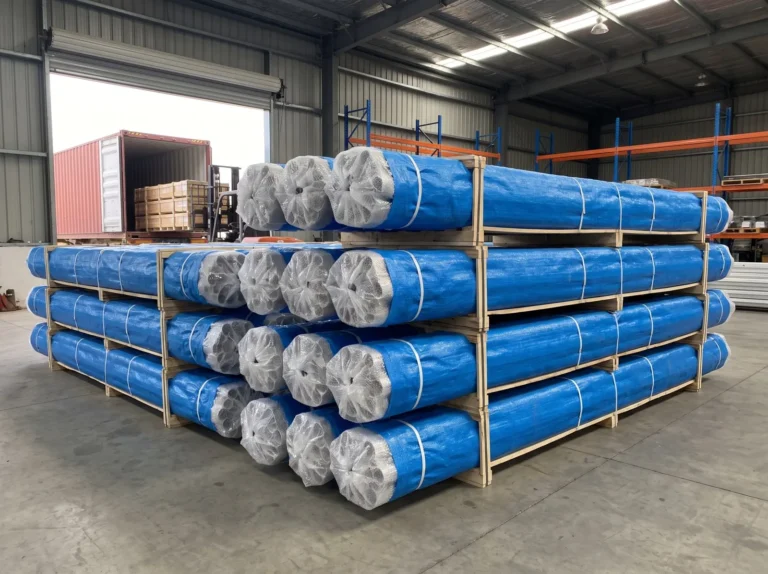
Each aluminum or stainless steel pole is wrapped to prevent scratches, dents and finish damage.
Solar panels are packed in reinforced cartons with corner protection and vibration-resistant separators.
Batteries and controllers are packed separately with model labels, wiring diagrams and installation instructions.
Pole, panel bracket, battery, controller and LED components are labelled as one installation set.
~100 pcs
~200 pcs
15–25 days
Loading quantity depends on pole length, panel dimensions, battery packaging and shipping requirements. A container loading plan is supplied before shipment.
Questions buyers ask before ordering
Dimming, motion sensing and remote monitoring options help reduce energy consumption.
Select the pole material and finish to match corrosion, weight and architectural requirements.
Battery, controller, wiring and LED modules remain accessible for inspection and replacement.
Yes. Each arm has an independent connection and cable route, so one arm can be replaced without removing the opposite arm or shaft.
Yes. Send the PDF or DWG with luminaire weight, projected area, wind speed and the required geometry. We will return a production drawing for approval.
Yes. Provide the terrain category, design wind speed and luminaire data for both sides. Project-specific calculations can be supplied with the quotation.
Panel orientation, tilt and bracket strength are matched to the site and wind criteria.
Yes. Factory or third-party inspection is accepted. A dimensional and photo inspection report can also be supplied for each batch.