
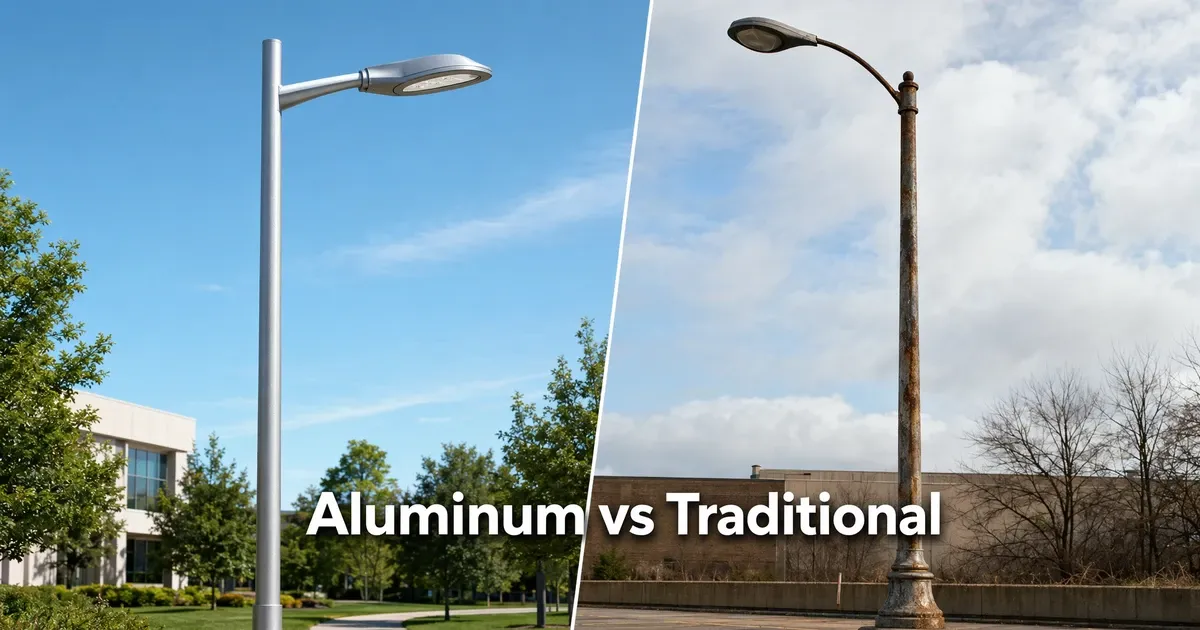
Introduction
Choosing the right light pole can significantly impact your project’s success, as each type offers distinct advantages and disadvantages.
When you consider factors like material, durability, and maintenance, it becomes clear that both aluminum and traditional light poles present unique benefits. Aluminum poles boast lightweight design and corrosion resistance, while traditional poles often provide a sense of timelessness and stability.
Understanding these differences is crucial for making an informed decision. The right choice won’t only affect safety and aesthetics but also influence long-term costs and performance.
As you weigh your options, keep in mind your specific needs and project requirements. This analysis will help you navigate through the key elements associated with both types of poles to find the best fit for your project.
Head-to-Head Comparison: Aluminum vs. Traditional Light Poles
When you compare aluminum light poles to traditional options, several key factors come into play.
You’ll want to consider initial cost, weight, transport logistics, corrosion resistance, and overall strength and durability.
Each aspect influences your decision based on your specific needs and budget.
Factor
In the battle between aluminum and traditional light poles, key factors like durability, maintenance, and cost often take center stage.
Aluminum poles shine in terms of durability; they resist rust and corrosion, making them ideal for various weather conditions. On the other hand, traditional steel poles may succumb to rust over time, requiring more frequent replacements.
When it comes to maintenance, aluminum is a winner again—minimal upkeep is needed compared to traditional poles, which may need regular painting and rust prevention treatments.
While steel might offer a lower initial cost, consider long-term savings with aluminum’s durability and low maintenance.
Ultimately, your choice hinges on balancing durability and maintenance costs with aesthetic and functional needs.
Initial Cost
The initial cost of aluminum light poles often captures attention, especially when compared to traditional steel options. Typically, you’ll find that aluminum poles come with a higher upfront price.
However, it’s essential to consider the long-term benefits they offer. While steel poles might seem cheaper initially, they often require more maintenance due to rust and corrosion. In contrast, aluminum’s resistance to these issues means you’ll save on repair and replacement costs over time.
When you’re budgeting for your project, think beyond that first expense; evaluate the total lifecycle cost. Remember, investing in aluminum might strain your wallet now, but it could pay off in savings and durability later, making it a smart choice for many applications.
Weight & Transport
Although traditional light poles may appear sturdy, their heavier weight compared to aluminum poles can significantly impact transport and installation.
When you choose aluminum, you’re opting for a lightweight solution that simplifies handling during transportation. This reduced weight allows for easier maneuverability, making it less labor-intensive for your installation crew. You won’t need specialized equipment for moving aluminum poles, which can save you time and money during setup.
In contrast, traditional light poles often require heavier machinery and more personnel for transport, escalating overall project costs.
The savings you gain from reduced labor and equipment needs with aluminum poles can be substantial. Ultimately, considering weight in your decision leads to more efficient transport and a smoother installation process.
Corrosion Resistance
When comparing corrosion resistance, aluminum poles stand out as a superior option over traditional steel poles. Aluminum naturally forms a protective oxide layer that shields it from moisture and corrosive elements, making it highly resistant to rust.
In contrast, steel poles often require coatings or galvanization to prevent corrosion, which can wear off over time, exposing the metal beneath to harsh environments. This vulnerability can lead to costly repairs or even premature replacement.
Strength & Durability
Strength and durability are crucial factors to consider when selecting light poles for any application.
Aluminum light poles boast impressive strength-to-weight ratios, allowing them to withstand harsh weather conditions while remaining lightweight. Their structural design minimizes the risk of bending or breaking, ensuring long-term reliability.
On the other hand, traditional steel poles are often heavier and may require additional support to endure extreme conditions. However, steel’s density provides a robust option but can also lead to rust and corrosion if not properly treated.
In terms of longevity, aluminum poles generally outperform traditional options, as they resist deformation and fatigue over time.
Ultimately, if you’re looking for a strong and durable solution, aluminum poles are often the better choice.
Maintenance
Maintenance plays a key role in the longevity and performance of light poles, so understanding the differences between aluminum and traditional options can save you time and resources.
Aluminum poles typically require less upkeep due to their corrosion-resistant properties, meaning you won’t have to worry as much about rust or deterioration. In contrast, traditional steel or wooden poles might need regular inspections for signs of wear, rust, or pest damage, resulting in higher maintenance costs.
You’ll find that aluminum poles are also easier to clean. Overall, opting for aluminum can reduce the frequency of your maintenance checks and associated costs, allowing you to focus on other essential tasks.
Aesthetics
Aesthetics play a significant role in the choice between aluminum and traditional light poles. When you consider the design and visual impact of your lighting solutions, aluminum poles often stand out for their sleek, modern appearance. They can easily blend into contemporary settings, enhancing the overall look of your space.
On the other hand, traditional light poles made from materials like wood or steel offer a timeless charm, fitting well into historic or rustic environments. Your decision may come down to whether you’re aiming for a modern aesthetic or a classic feel.
Ultimately, both options have unique design elements that can either complement or contrast with the surrounding architecture, so think carefully about the visual experience you want to create.
Lifespan
When it comes to lifespan, aluminum light poles typically outlast their traditional counterparts.
While traditional poles made from steel or wood can succumb to rust, rot, and corrosion over time, aluminum’s resistance to these issues gives it a significant edge.
You’ll find that aluminum poles often last 25 years or more, while traditional poles may require replacement every 15 to 20 years depending on the environment.
This durability not only saves you replacement costs but also minimizes maintenance efforts.
In high-traffic areas or harsh climates, you’ll appreciate how aluminum’s resilience translates into lower long-term expenses.
Ultimately, if you’re seeking longevity with minimal upkeep, aluminum poles are the smarter investment for your lighting needs.
Environmental Impact
The durability of aluminum light poles isn’t just about longevity; it also plays a pivotal role in their environmental impact. Unlike traditional poles, which often require frequent replacements, aluminum poles last longer and reduce waste. This means fewer resources are consumed over time, contributing to lower carbon emissions during production and transportation.
Moreover, aluminum is recyclable, so when it reaches the end of its life, it can be repurposed instead of ending up in landfills. Traditional light poles, often made from non-recyclable materials, don’t have that advantage.
Long-Term Cost Analysis (The 20-Year Total Cost of Ownership)
Understanding the long-term financial implications of lighting solutions is essential for making informed choices.
When evaluating the 20-year total cost of ownership for aluminum and traditional light poles, you’ll notice significant differences. Aluminum poles typically have lower maintenance costs due to their rust resistance and durability. While the upfront cost might be higher, their longevity can lead to savings over time.
Traditional poles, on the other hand, often require more frequent replacements and maintenance, adding to your overall expenditure. Additionally, consider energy efficiency with lighting technology, as it can impact your electricity bills.
Which One Should You Choose?
Given the long-term cost considerations outlined previously, choosing between aluminum and traditional light poles hinges on several key factors.
First, think about your budget. Aluminum poles may have a higher upfront cost, but their durability and lower maintenance could save you money over time.
Next, consider the environment. If you’re in an area prone to corrosion or extreme weather, aluminum’s resilience might be your best bet.
Also, evaluate aesthetic preferences; aluminum poles often come in various finishes, enhancing your project’s visual appeal.
Finally, weigh the installation process. Aluminum poles are lighter and easier to handle, which can streamline setup.
In the end, base your decision on your specific needs and environment to ensure you get the best value.
Conclusion
Ultimately, choosing between aluminum and traditional light poles depends on your unique project requirements and circumstances.
If you prioritize durability and low maintenance, aluminum poles might be the way to go, especially in harsh weather conditions. They’re lighter and easier to install, which can save you time and labor costs.
On the other hand, traditional light poles may appeal to you if upfront cost is a significant factor and you’re working in a stable environment. They can offer a classic aesthetic that some projects demand.
Carefully weigh the pros and cons related to your specific application, budget, and long-term goals. In the end, the right choice will enhance both the functionality and appeal of your lighting installation.